

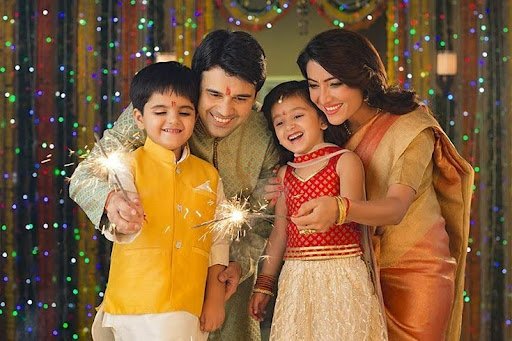
Firecrackers are a part of almost every celebration in India, whether it’s Diwali, New Year’s, a wedding, local fairs, or even a sports victory. But in recent years, conversation around fireworks has started to shift.
Walk into any store today, and you’ll notice the shift in the kind of questions customers ask. Earlier, people would point at the loudest bomb or the brightest rocket and call it a day.
Now?
They pause. They ask. They compare.
“Does this firecracker produce low noise?”
“Is there a safer option?”
“Are these tested and certified?”
This shift matters.
If you sell firecrackers, or even if you just want to know what you’re buying, you need to know about what actually goes inside them. Because the difference between traditional and low-smoke firecrackers starts at the material level.
What goes into Traditional Firecrackers?
Traditional firecrackers haven’t really changed much over the years. The basic composition is still more or less the same, and that’s exactly why they behave the way people expect them to.
Manufacturers typically use:
- Potassium Nitrate: Acts as an oxidizer to fuel combustion
- Sulfur: Helps ignite the reaction quickly
- Charcoal: Provides fuel for burning
- Aluminum powder: Produces bright flashes and light
- Metal salts like barium (green), strontium (red), and copper (blue)
Put all of this together and you get a reaction that’s fast, loud, and hard to miss. Research published on NCBI confirms that these chemical combinations charcoal, sulfur, potassium, aluminum, iron, and barium nitrate are the primary sources of particulate matter in fireworks smoke. That’s also why traditional crackers still feel more “powerful” compared to newer options.
Why customers still choose them:
- Loud, attention-grabbing sound
- Intense visual brightness
- Strong, immediate ignition
- Reliable performance across large events
For weddings, large gatherings, and high-energy celebrations, traditional firecrackers still lead.
Where the concern starts?
While traditional firecrackers deliver on performance, customers today also notice their aftereffects. As a brand, we don’t ignore that reality, we address it.
- On continuous bursting, traditional formulations release substantial particulate matter. A peer-reviewed study on Diwali air quality across Indo-Gangetic Plains states found peak hourly PM2.5 concentrations above 900 μg/m³ in Delhi compared to the WHO’s recommended annual guideline of just 5 μg/m³. Post-Diwali 2025 data tracked by Business Standard showed Delhi’s average PM2.5 touching 488 μg/m³ in the 24 hours after the festival, a five-year high.
- Strong smell after use: The presence of sulfur creates a noticeable odour that not all customers prefer, particularly in enclosed or residential spaces.
- Growing awareness among buyers: Urban families, parents, and health-conscious buyers now actively look for lower-emission alternatives. The Supreme Court of India has mandated that only certified green crackers may be sold in several states during Diwali, while fully banning crackers containing barium salts, lithium, arsenic, and mercury.
This shift has pushed demand for alternatives.
What are Low-smoke firecrackers?
Low-smoke firecrackers, often called ‘green crackers‘, are designed to reduce air pollution without completely eliminating the festive experience. They were first developed by the National Environmental Engineering Research Institute (NEERI) under the Council for Scientific and Industrial Research (CSIR), with formulations achieving up to 30% reduction in particulate matter.
Instead of completely changing the fireworks, manufacturers have focused on modifying the chemical composition of the material. Key changes include:
- Reduced sulfur content
- Alternative oxidizers in place of potassium nitrate
- Controlled use of metal powders
- Additives that suppress particulate emission
The goal isn’t to remove smoke entirely, that’s not realistically possible but to significantly reduce it. According to Business Standard’s coverage of the green cracker supply chain shift, these low-smoke firecrackers emit 30–40% less particulate matter and sulfur dioxide than conventional ones.
For buyers who want to verify authenticity, CSIR-NEERI-certified products carry a green logo and a QR code. Scanning it confirms the product meets India’s official eco-friendly fireworks standards; anything without these markings is likely not genuine. Arora Fireworks carries certified low-smoke options across all major product types. To check current availability, contact our team.
How Low-Smoke Firecrackers Differ in Materials — and What It Means for Customers?
The difference between traditional and low-smoke firecrackers isn’t just in the marketing. It’s in chemistry.
Reduced Sulfur Levels
Lower sulfur content helps reduce harsh smoke and odor.
Customer impact:
A cleaner experience, especially for family settings.
Improved Oxidizer Balance
Modified oxidizers allow more controlled combustion.
Customer impact:
Steady performance and fewer emissions.
Controlled Metal Usage
Visual quality maintained with less residue.
Customer impact:
Good brightness, lighter after-effects
Cleaner Burn Formulation
Better combustion means less unburnt material.
Customer impact:
Less smoke on repeated bursting.
Traditional vs Low-Smoke: What Customers Actually Notice
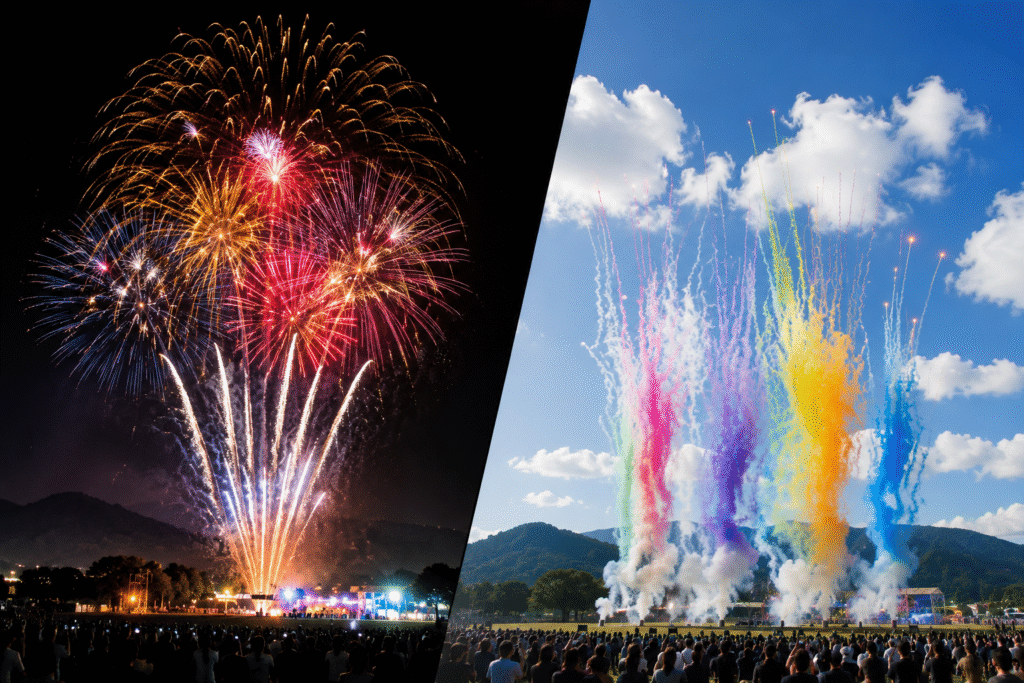
For most buyers, the real question is how these crackers perform in use. Do low-smoke crackers perform the same as traditional ones? Not exactly but the gap is getting smaller every year.
| Feature | Traditional Firecracker | Low-smoke firecrackers |
| Smoke | Heavy smoke output | Noticeably reduced smoke |
| Sound | Louder and sharper | Slightly reduced intensity |
| Visual Effect | Brighter and more intense | Slightly softer but improving |
| Burn time | Standard duration | Similar, sometimes slightly shorter. |
This side-by-side view makes one thing clear:
Low-smoke firecrackers reduce visible smoke significantly, but traditional firecrackers still lead in sound intensity and raw visual impact.
That’s why both categories continue to sell, just to different types of customers.
Why this shift matters to Retailers
This change in customer preference is not just a trend, it directly affects how firecrackers sell. Retailers are no longer dealing with one type of buyer.
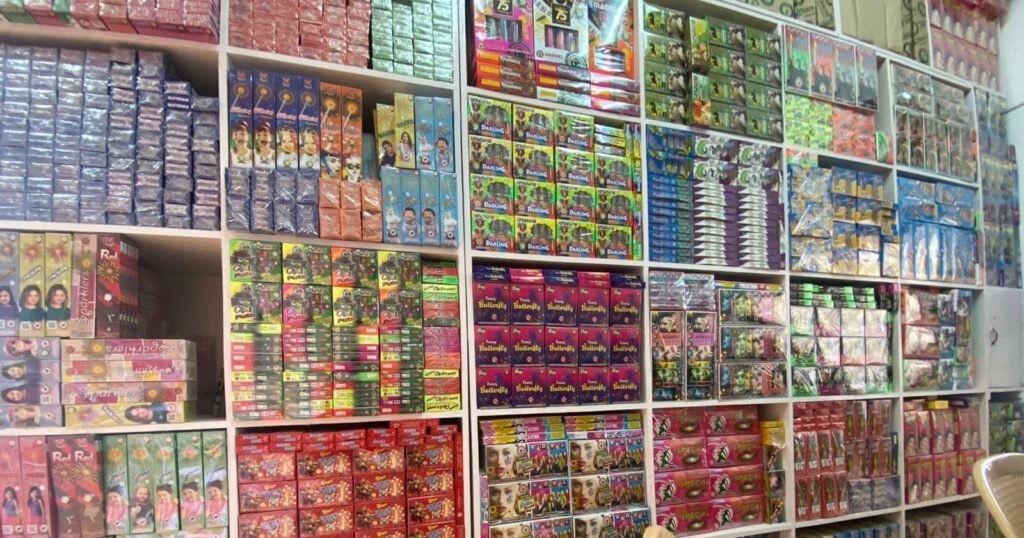
On one side, you still have customers who want loud, high-impact traditional firecrackers for their large celebrations, and on the other, you now have customers actively asking for low-smoke or green cracker options, especially in urban areas and family settings.
If you stock up only one category, you risk losing the other. Understanding both traditional and low-smoke firecrackers is no longer optional, it’s a business advantage. If you’re looking to build a reliable fireworks supply for events and retail, having the right mix is what separates a good season from a great one.
Smart Inventory Strategy: Don’t Replace, Balance
Many retailers make the mistake of thinking they need to choose between traditional and low-smoke firecrackers. In reality, the smartest approach is balance.
Keep your fast-moving traditional products and add low-smoke options alongside them. This allows you to:
- Serve a wider range of customers
- Increase overall sales per customer
- Stay prepared for changing demand
Instead of forcing a choice, you give customers options, and that builds trust.
How to sell Low-smoke firecrackers without confusing customers?
Customers get interested in low-smoke crackers but don’t always understand what that means — and most of them don’t care about the technical side. They just want to know one thing: “What difference will I feel?”
So instead of going into materials or composition, keep it simple and relatable:
- “This one gives off less smoke compared to regular crackers.”
- “Better option if you’re bursting near home or with family.”
- “Doesn’t feel as heavy in the air after multiple bursts.”
Showing works even better than explaining. A small demo at the point of sale can eliminate hesitation almost immediately. Many retailers now mix both types in a single bundle — some traditional, some low-smoke — so customers try the new option without having to commit to a full switch. This works especially well for birthdays, anniversaries, and family celebrations where children and elderly guests are present. In most cases, once a customer tries it, they come back asking for it again.
Where Traditional Firecrackers still lead?
Even with the rise of low-smoke firecrackers, traditional firecrackers continue to dominate in several segments. They remain the first choice for:
- Large-scale celebrations like weddings and processions
- Customers who specifically want loud, impactful sound
- Budget-focused buyers
- Sports events and corporate milestone displays
Ignoring this demand doesn’t make sense. The goal is not to replace traditional firecrackers — it’s to complement them.
The Future Of Firecrackers is Balanced
The firecracker industry is not moving away from celebrations, it is evolving. Customers still want excitement, sound, and visual impact, but they also want better control over smoke and overall experience. A research paper on toxic elements in green crackers published on arXiv confirms that while green crackers still emit some pollutants, their lower concentrations of hazardous chemicals represent a meaningful step forward for both consumer health and environmental compliance.
The future doesn’t belong to just one category, it belongs to retailers and brands that understand and offer both.
Build a smarter firecracker inventory
If you’re already thinking about next season’s stock, this is the right time to plan it properly instead of rushing at the last minute.
Retailers who keep a mix consistently do better — not because one category replaces the other, but because different customers walk in looking for different things. With Arora Fireworks, you don’t need to overthink that part. You can stock your usual fast-moving traditional crackers alongside low-smoke options for customers who specifically want something lighter. That way, you’re never caught saying “we don’t have that” when demand shifts.
If you want to sort your inventory in a way that actually works on the ground, connect with Arora Fireworks and we’ll help you figure out a mix that makes sense for your store and your customers.
Why Choose Arora Fireworks?
At Arora Fireworks, we understand how the market is changing because we work closely with retailers and customers across segments. We don’t believe in pushing one type of product over another. Instead, we focus on offering:
- Reliable traditional firecrackers that continue to perform
- Carefully selected low-smoke options that meet changing demand
- Consistent quality across every product
Because in this business, consistency and trust matter just as much as variety. Whether you’re planning a large wedding display or a festive Diwali celebration, we help you find the right mix. Contact us to discuss your requirements.
Conclusion
Traditional and low-smoke firecrackers are not competing against each other; they just serve different purposes. Traditional firecrackers continue to deliver the loud sound, intensity, and visual impact that many customers still look for, especially during large celebrations. At the same time, low-smoke firecrackers address a growing demand for more controlled, cleaner experiences, particularly in urban settings and family environments. The real shift isn’t about replacing one with the other. It’s about understanding what your customers want and offering the right options.
For retailers, this means moving beyond a one-category approach and building a balanced inventory that reflects both performance and evolving preferences. And for buyers, it simply comes down to choosing what fits to the way they want to celebrate
Build a Smarter Firecracker Inventory
If you’re already thinking about next season’s stock, this is honestly the right time to plan it properly instead of rushing at the last minute.
One thing we’ve seen again and again is that retailers who keep a mix tend to do better. Not because one category replaces the other, but because different customers walk in looking for different things. With Arora Fireworks, you don’t really have to overthink that part.
You can stock:
- Your usual fast-moving traditional crackers that people already ask for
- Low-emissions options for customers who specifically want something lighter
This way, you’re not stuck saying “we don’t have that” when demand shifts, even if minimal.
And it does shift, especially during peak days.
If you want to sort your inventory in a way that actually works on the ground (not just in theory), you can reach out to us. Connect with Arora Fireworks and we’ll help you figure out a mix that makes sense for your store and your customers.
Frequently Asked Questions (FAQs)
1. Are low-smoke firecrackers completely pollution-free?
No. Low-emissions firecrackers are designed to reduce smoke, not remove it entirely. CSIR-NEERI formulations reduce particulate matter by up to 30–40%, but they are not zero-emission products.
2. Do low-smoke crackers perform the same as traditional ones?
Not exactly. Traditional crackers still feel louder and sharper in most cases. Low-smoke crackers are more controlled, but the gap is narrowing every year as formulations improve.
3. Which type of firecracker sells more?
Traditional firecrackers still take the lead in overall volume. But low-smoke options are picking up steadily, especially in cities and among families with young children or elderly members.
4. How do I verify that a green cracker is genuine?
Look for the CSIR-NEERI green logo and a QR code on the packaging. Scanning the code confirms the manufacturer, licence number, and compliance with official eco-friendly fireworks standards. Products without these markings may not be certified.
5. Why choose Arora Fireworks?
We don’t push a one-sided approach. We offer a mix that actually sells — reliable traditional firecrackers alongside low-smoke options that customers are increasingly asking for. Contact us to discuss your inventory needs.
 By
By