

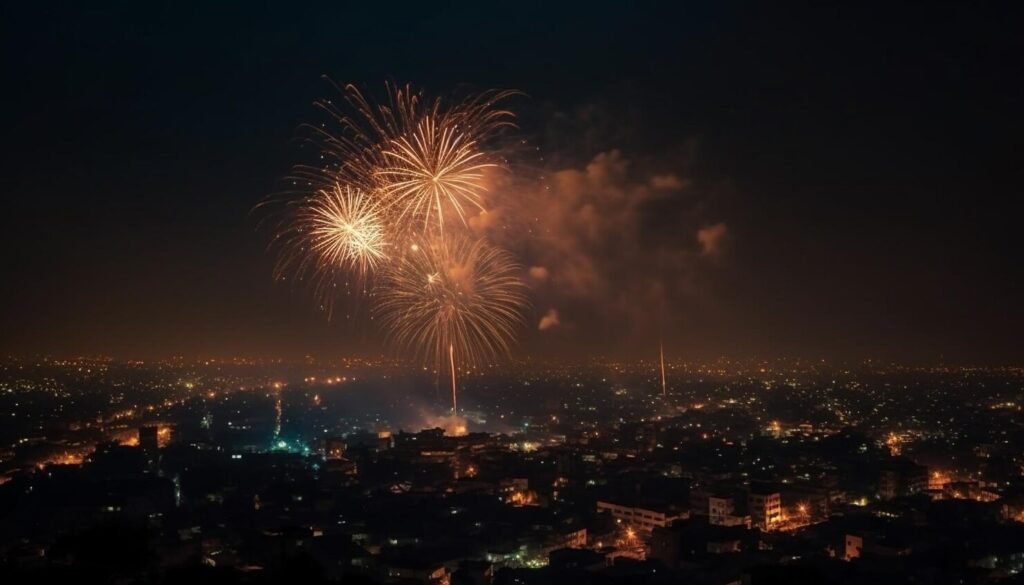
Dehradun offers a striking backdrop for night photography, from the architecture of the Forest Research Institute to the hills surrounding the valley. But photographing fireworks successfully requires more than simply pressing the shutter button. Choosing the right fireworks for night photography, using the correct camera settings, and selecting a stable vantage point can make the difference between a blurred burst and a sharp, well-exposed image.
Green fireworks and other low-emission fireworks can be particularly useful for night photography because reduced smoke can help keep the sky clearer during a display. For photographers, this can mean better visibility of individual light trails and less haze between the camera and the fireworks.
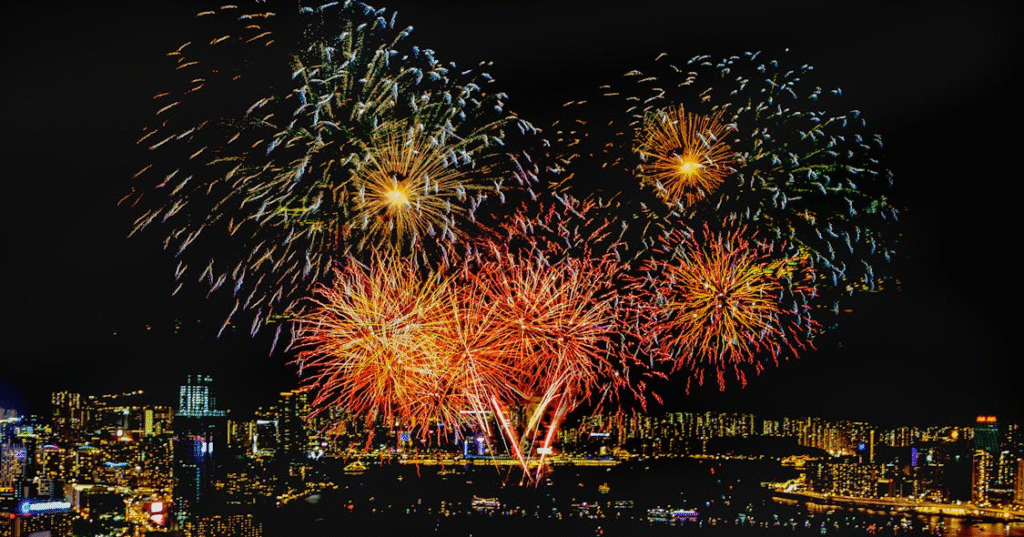
Anatomy of a Shot: Fireworks For night Photography
Not all fireworks produce the same results in photographs. Experienced photographers often choose effects with distinctive shapes, long-lasting trails, and predictable bursts because these characteristics work particularly well with long-exposure photography.
Golden Willow – Long, Trailing Sparks
Golden Willow fireworks produce long, cascading trails of golden sparks that can create striking patterns during a long exposure. Their slow-falling trails are particularly useful when you want to fill more of the frame with light.
Why it works: The sparks’ slow descent creates dense trails of light filling the empty space in the background.
Pro Tip: Start with a shutter speed of around 4–8 seconds and adjust it based on the brightness of the fireworks and the surrounding light. Longer exposures can capture more of the falling trails but may also cause overlapping bursts.
Crossette: Geometric Firework Patterns
A Crossette firework produces a distinctive pattern in which multiple stars split and create a crisscross or intersecting effect. Its structured shape can add visual variety to a fireworks photograph.
Why it works: Its branching, geometric pattern creates clearly defined lines of light that can stand out against a dark sky.
Pro Tip: Avoid stacking too many Crossette bursts in a single frame. Give each burst enough space in the composition so the intersecting trails remain distinguishable.
Ring and Heart Fireworks: Distinctive Shapes
Some fireworks are designed to produce recognizable shapes such as rings and hearts. These effects can create strong hero images, particularly when photographed against a clean, dark sky or used as part of an event composition.
Why it works: Recognizable shapes immediately attract attention and can give a fireworks photograph a clear visual subject rather than a collection of random light trails.
Pro Tip: Because shaped effects can disappear quickly, start with a shorter exposure of around 1–3 seconds and adjust based on the firework’s brightness and distance. A shorter exposure can help preserve the outline of the shape.
Camera Gear for Fireworks Photography in Dehradun
Dehradun’s hills, open viewpoints and occasional wind can make camera stability and composition challenging. A sturdy tripod, suitable lens and remote shutter release can make it easier to capture sharp fireworks trails.
Stability Factor
Wind can be a problem at exposed hill viewpoints, especially when using longer shutter speeds. Use a sturdy tripod, keep the tripod legs as low and wide as practical, and avoid extending the center column unless necessary. A remote shutter release or your camera’s self-timer can also reduce camera shake.
Choosing the Right Lens: Wide-Angle vs. Standard
Wide-angle lenses (14–24mm): Useful when you want to include fireworks, the surrounding landscape and Dehradun’s city lights in the same frame.
Standard lenses (35–50mm): A good choice when you want a tighter composition that combines fireworks with a specific landmark or part of the cityscape, such as the Clock Tower (Ghanta Ghar).
Telephoto lenses (70–200mm): Useful when you’re photographing fireworks from a considerable distance and want to isolate individual bursts or patterns against the sky.
Camera Settings for Fireworks for Night Photography
Choosing the right settings is essential when photographing fireworks at night. The best fireworks for night photography can still produce poor results if your ISO, aperture and shutter speed are not balanced correctly.
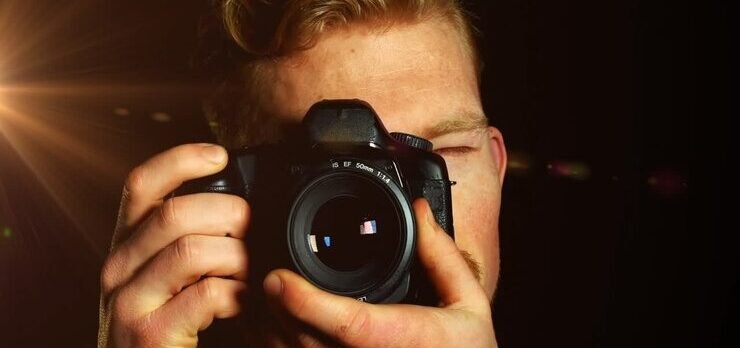
ISO: Keep It Low
Start with an ISO of 100–200. Fireworks are bright enough that you usually don’t need a high ISO, and a lower setting helps reduce digital noise and preserve color and detail. Increase the ISO only if the surrounding landscape is too dark.
Aperture: Start Around f/8–f/11
An aperture around f/8–f/11 is a useful starting point for fireworks because it helps control the brightness of the bursts while keeping the surrounding scene reasonably sharp. Adjust the aperture depending on the brightness of the fireworks and the amount of ambient light.
Shutter Speed: Control the Length of the Trails
A shutter speed of around 2–8 seconds is a useful starting range for fireworks. Shorter exposures can isolate individual bursts, while longer exposures can capture multiple explosions and longer light trails. Bulb mode can be useful when you want to start and stop the exposure manually, but it isn’t essential for most fireworks photography.
Timing the Exposure
Pro Tip: Watch the launch trail and listen for the burst. If you open the shutter just before or as the firework reaches its peak, you can often capture the full trajectory and explosion in one frame. With practice, timing becomes easier to predict.
Focus: Use Manual Focus
Autofocus can struggle against a dark sky. Focus on a distant light or other far-away subject using Live View, then switch to manual focus and avoid changing the focus ring during the shoot.
Best Places for Night Photography in Dehradun
The location you choose can be just as important as the fireworks themselves. When learning how to photograph fireworks at night, look for a viewpoint that gives you a clear view of the sky while also providing an interesting foreground, landmark or cityscape. In Dehradun, several viewpoints can help create more contextual and memorable images.
Forest Research Institute (FRI)
The distinctive architecture of the Forest Research Institute can provide a strong foreground for fireworks images. If photography is permitted from your chosen position, try composing the frame so that the building occupies the lower portion of the image while the fireworks fill the sky above it.
Mussoorie Diversion and Elevated Viewpoints
Elevated viewpoints around the Mussoorie-Dehradun area can provide wider views of the valley and city lights. For a layered composition, place the cityscape in the lower part of the frame and leave enough sky above it for the fireworks. Choose a safe, legally accessible viewpoint rather than stopping on or near an active roadway.
Sahastradhara Road and Open-Sky Viewpoints
More open areas around Sahastradhara can offer a wider view of the night sky, which can be useful when you want to capture larger bursts without nearby buildings dominating the frame. Check local access and event restrictions before setting up a tripod.
The Black Card Technique: Capture Multiple Fireworks in One Frame
A simple black card can help you combine multiple fireworks bursts into a single long-exposure image. Start a long exposure, then briefly cover the front of the lens with the black card whenever there is a gap between bursts. Remove the card when the next firework launches or explodes. Repeat this during the exposure to build several bursts into the same frame while keeping the dark areas of the sky under control.
Pro Tip: Use a card that is large enough to cover the lens completely without touching it. Keep the camera fixed on a sturdy tripod throughout the exposure, and avoid moving the card across the lens.
This technique is particularly useful when learning how to photograph fireworks at night because it allows you to build a more dynamic composition without relying on a single burst.
Post-Processing Fireworks Photos
Post-processing should enhance the natural colors, contrast and detail captured in the original image rather than making the fireworks look artificial. Small adjustments to contrast, blacks and white balance can help bring out the light trails while keeping the scene realistic.
Dehaze: Use the Dehaze adjustment sparingly to reduce the appearance of smoke and haze. Too much Dehaze can make fireworks look harsh and introduce unnatural contrast.
Blacks and shadows: Lower the Blacks or Shadows slightly to deepen the night sky and make the fireworks stand out. Avoid pushing them too far, as crushed shadows can remove useful detail from buildings and the surrounding landscape.
White balance: Start with a cooler white balance if the image looks too warm, then adjust it based on the surrounding buildings and city lights. A setting around 3000–4000K can be a useful starting point, but the best value depends on the scene and the desired look.
Highlights: Reduce highlights if the brightest fireworks have lost color or detail. This can help recover some definition in very bright bursts.
Green Fireworks and Night Photography: What Has Changed?
Green fireworks, more accurately described as reduced-emission or “green” crackers, are designed to reduce emissions compared with conventional fireworks. CSIR-NEERI has developed and tested formulations intended to reduce particulate and gaseous emissions, and the institute continues to work on further emission reductions.
For night photography, reduced smoke can be an advantage because heavy smoke can scatter light and obscure later bursts. A clearer sky can make individual trails easier to distinguish, although the actual result still depends on weather, wind, humidity and the amount of fireworks being used.
Cleaner sequences: Reduced smoke may help photographers capture multiple bursts during a sequence without the accumulated haze becoming as visually dominant. The actual number of usable frames depends on wind, humidity, the number of fireworks and the exposure settings.
Better separation: Less smoke in the scene can make individual colors and light trails appear more distinct, particularly when photographing several bursts over a longer exposure.
Common Dehradun Challenges When Photographing Fireworks
Even with the best equipment, Dehradun comes with its own set of problems.
Problem: The “Haze” problem
Haze, fog, smoke and other airborne particles can reduce contrast and make fireworks appear softer or less defined. This can be especially noticeable during winter or when several fireworks are being launched in the same area.
Solution: Choose a position that is clear of the densest smoke and, when possible, stay upwind of the fireworks. Keep your lens clean and use a lens hood to reduce stray light. During editing, use Dehaze and contrast adjustments carefully rather than pushing the Blacks slider to its maximum, which can make the sky look unnaturally dark.
Problem: Light Pollution
City light pollution can reduce contrast between the dark sky and fireworks, particularly when photographing from elevated viewpoints overlooking Dehradun.
Solution: Start by lowering ISO and using a narrower aperture or shorter shutter speed to control the overall exposure. If the fireworks are still too bright for the long exposure you want, an ND filter can help reduce the amount of light reaching the sensor. However, an ND filter will darken the entire scene, including the fireworks and city lights.
Watch the wind direction: Firework smoke can quickly drift into your frame and create a bright haze around later bursts. If possible, position yourself so the wind carries smoke away from the camera rather than toward it.
Fireworks Photography Safety and Ethics
Good fireworks photography starts with a safe position. Photographers should never move closer to fireworks, handle fireworks or enter restricted areas simply to improve a composition. Choose a stable, permitted location and keep a safe distance from the display.
Fire Safety: Keep your tripod away from dry grass, flammable materials, active fireworks and designated firing areas. Never place yourself or your equipment in the path of a firework. If you’re photographing an organized display, follow the instructions of the event staff and maintain the designated spectator distance.
No Trace: Take all personal items and waste with you when you leave. Avoid disturbing vegetation, wildlife or the surrounding area while setting up your equipment.
Private Property Rights: Some of the best viewpoints may be on private property or within restricted areas. Always obtain permission before setting up a tripod, entering a terrace or using a private viewpoint. Do not block roads, pathways or emergency access.
Don’t approach a firework that fails to ignite. A misfired firework can still ignite unexpectedly, so leave it alone and follow the safety instructions by PESO.
Conclusion
Capturing fireworks at night in Dehradun is about combining the right fireworks, camera settings and location. Choosing fireworks with long-lasting trails or distinctive shapes can help create stronger compositions, while a stable tripod, manual focus, low ISO and carefully controlled shutter speed give you greater control over the final image.
Whether you’re photographing the architecture of the Forest Research Institute, the Dehradun valley from an elevated viewpoint, or an open sky around Sahastradhara, the best fireworks for night photography are the ones that complement your composition rather than simply filling the frame.
With the techniques in this guide, you can experiment with long exposures, capture multiple bursts in one frame and make more informed adjustments for smoke, haze and city light. The result should be a photograph that captures both the fireworks and the character of Dehradun.
Frequently Asked Questions
Do you need a lens filter for fireworks at night?
Usually, no. A clear lens without a filter is generally preferable for fireworks because additional glass can create unwanted reflections or ghosting when bright fireworks are photographed against a dark sky. A lens hood can also help reduce stray light from nearby sources.
How do you focus when photographing fireworks at night?
Use manual focus. Before the fireworks begin, use Live View to focus on a distant light or other far-away subject. Once the image appears sharp, switch to manual focus and avoid touching the focus ring during the shoot. Autofocus can struggle when the camera is pointed at a mostly dark sky.
Can you photograph fireworks with a mobile phone?
Yes. Many modern phones offer Night, Pro or manual camera modes that allow you to control exposure. A small tripod can help keep the phone stable, while a shutter speed of around 2–5 seconds can be a useful starting point when the phone allows manual control. Experiment with the exposure because bright fireworks can easily become overexposed.
What mistakes do beginners make when photographing fireworks?
The most common mistake is using an exposure that is too long for the number and brightness of the fireworks in the scene. Too many bursts can overlap and create a cluttered frame. Start with a shutter speed of around 2–5 seconds, review the result, and adjust according to the brightness and frequency of the bursts. Other common mistakes include raising the ISO unnecessarily, leaving autofocus enabled and failing to use a stable tripod.
Does weather affect fireworks photography at night?
Yes. Weather can have a significant effect on fireworks images. Clear conditions generally make it easier to capture defined light trails, while wind, humidity, fog and smoke can affect visibility and contrast. Wind can sometimes help move smoke away from the frame, while still conditions may allow smoke to accumulate and obscure later bursts. Check the conditions before choosing your shooting position.
 By
By